
To reduce days sales outstanding (DSO) in a small business, you need to act at three moments: before you sell (clear terms and short payment periods), when you invoice (invoice the same day, complete and with a due date) and after the due date (chase from day one in a fixed order). Measuring DSO every month and reviewing overdue invoices every week is what makes it work.
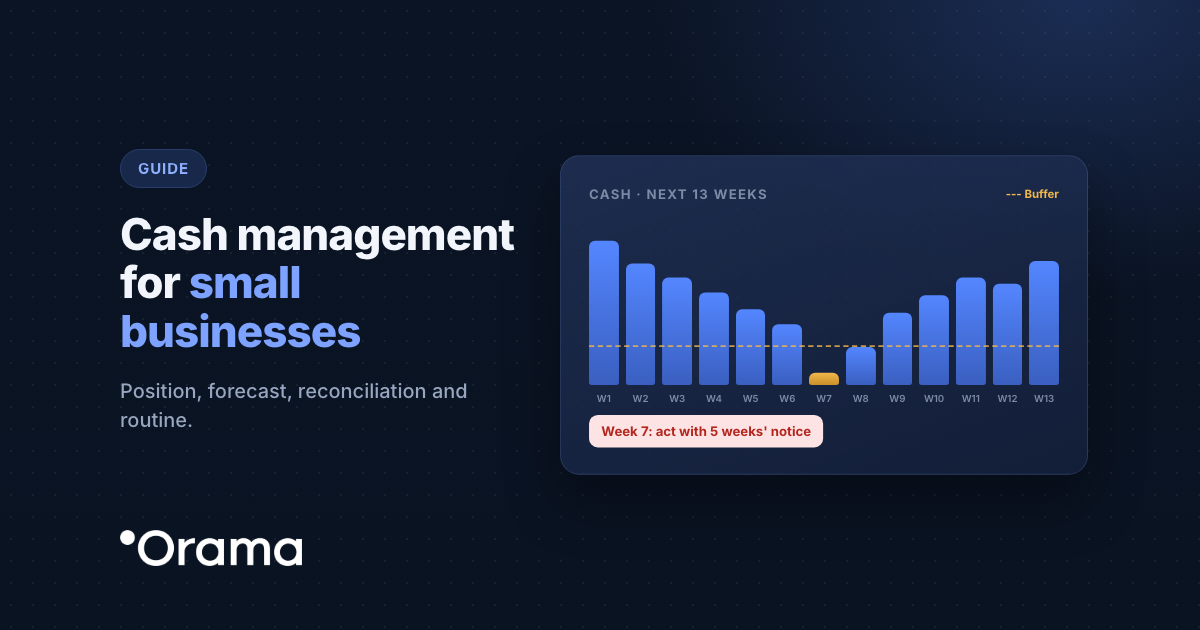
Every day you wait to get paid is money your business lends to its customers for free. In this post we explain how DSO is calculated, what a reasonable figure looks like and ten practical steps to bring it down. It is part of our guide to cash management for small businesses.
What DSO is and how to calculate it
DSO (days sales outstanding), or average collection period, measures how many days it takes you on average to get paid for your sales. The most common formula is:
DSO = (outstanding customer balance ÷ sales for the period) × days in the period
For example, if on 31 March you have €180,000 outstanding and you invoiced €270,000 in the quarter (VAT included, like the customer balance), your DSO is 180,000 ÷ 270,000 × 90 = 60 days.
Three tips to make the figure useful:
- Always use the same basis (with or without VAT in both figures) and the same period.
- Check it every month and look at the trend, not a single figure.
- Compare it with the payment terms agreed with your customers: if you agree 30 days and your DSO is 60, half the problem is collection, not terms.
What is a reasonable DSO?
In the EU, the Late Payment Directive sets 60 days as the usual maximum payment period between businesses (30 days if no other term is agreed), and the late-payment rules in your country may be stricter. So in most sectors a DSO above 60–70 days means something is wrong: either terms are too long or agreed terms are collected late. What matters is comparing your DSO with your average agreed terms and with your days payable outstanding (DPO): if you get paid later than you pay, you are financing the difference.
10 steps to reduce days sales outstanding
Before you sell
- Agree clear terms in writing. In the quote, the order or the contract. Anything not in writing gets negotiated later, almost always at your expense.
- Check new customers’ creditworthiness before giving credit, especially on large orders. For first orders, consider a deposit or payment up front.
- Offer payment methods that collect themselves: direct debit, card or a payment gateway. They cut delays because they don’t depend on the customer remembering.
When you invoice
- Invoice the same day you deliver or finish the service. Every day you delay invoicing is one more day of DSO.
- Invoice without errors: order number, correct tax details, a visible due date and your bank account. A rejected invoice resets the clock.
- On long projects, invoice by milestones instead of everything at the end.
After the due date
- Chase from the first day overdue, in a fixed order: a friendly reminder on day 1, a call on day 7, a second notice on day 15 and escalation to management on day 30.
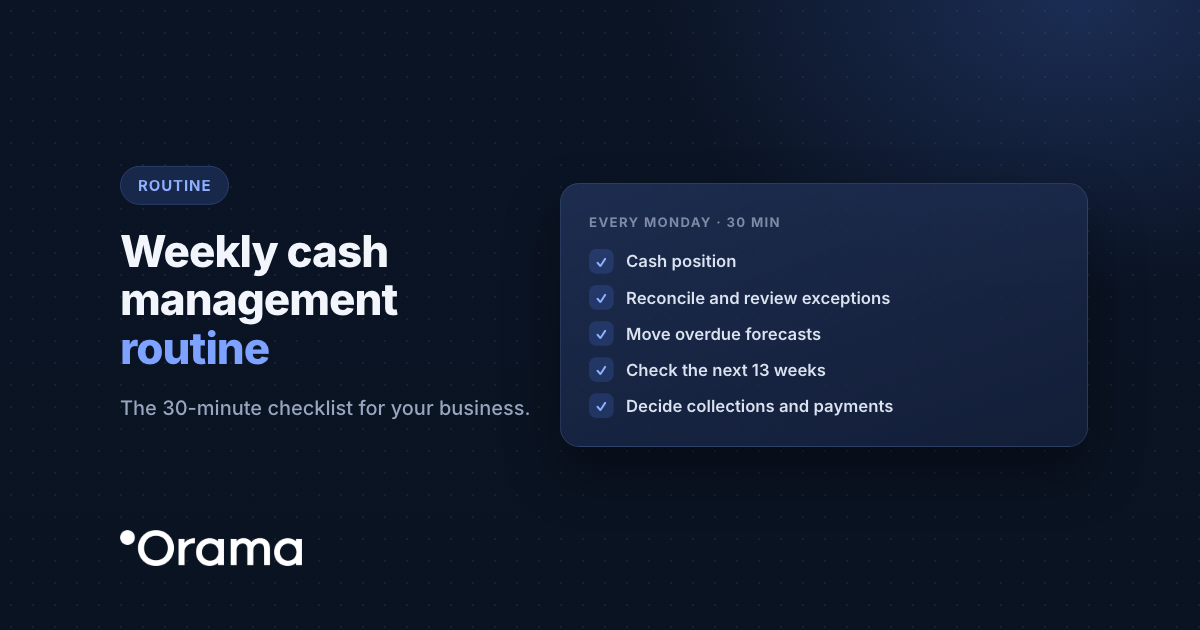
- Review the overdue list every week as part of your weekly cash routine and update the likely payment date in your forecast.
- Prioritise by amount and age: a few invoices usually account for most of the delay.
- If a customer always pays late, change the terms (deposit, shorter terms) or consider financing their invoices for early payment, bearing in mind that it has a cost.
How DSO affects your cash
Reducing DSO frees up cash directly. A quick rule: each day of DSO is worth one day of sales. A small business with €3M in annual sales (about €8,200 a day) that cuts its DSO from 65 to 50 days frees up about €123,000, without borrowing or selling more.
| Annual sales | Approx. daily sales | Cash freed by cutting DSO by 10 days |
|---|---|---|
| €1M | €2,700 | €27,400 |
| €3M | €8,200 | €82,200 |
| €10M | €27,400 | €274,000 |
| €25M | €68,500 | €685,000 |
That money improves your days of cash on hand and your working capital, and reduces how much you need from credit lines or other financing.
Anonymised example
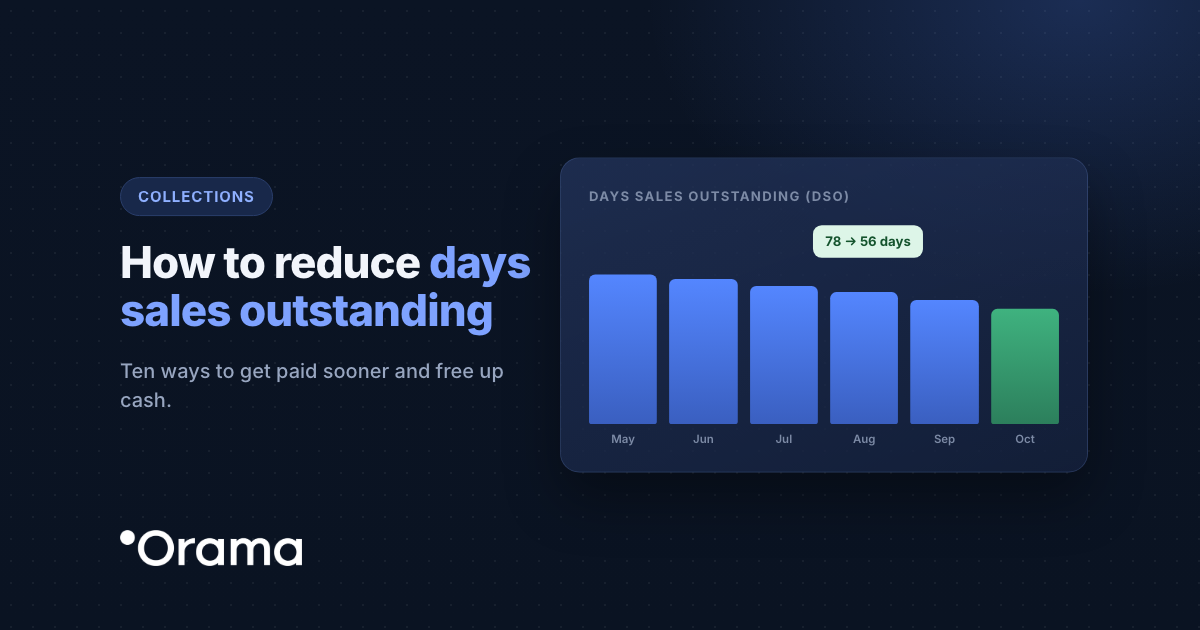
An installation company with €4M in sales had a DSO of 78 days against average agreed terms of 45. Analysing its overdue invoices, it found that 70% of the delay came from 12 customers and that it invoiced, on average, 6 days after finishing each job. It took three steps: invoicing the same day from the technician’s phone, chasing on a fixed schedule (days 1, 7, 15 and 30) and asking customers with the worst track record for a 30% deposit. In five months its DSO fell to 56 days and it freed up about €240,000 in cash.
How Orama helps
Orama brings the invoices from your ERP (Odoo, Holded, Sage 50, Sage 200, Sage Despachos, a3innuva, Business Central or Oracle NetSuite) into your forecast with their due dates and, when reconciling bank transactions, separates what has been collected from what is still pending. Overdue invoices that haven’t come in appear as overdue forecasts, so you can chase them and update their date. Start your 7-day free trial, no card. You can also connect our MCP to ask Claude or ChatGPT about your cash.