
Data management within a company is essential to know its status. We always hear about the importance of automating processes, especially when it comes to annual cash forecasting.
But how can we apply automation to our company?
The innovations that have taken place over the last few years have allowed the creation of software that helps companies manage their data without the need for a lot of knowledge or specific techniques. This progress can be seen in how companies manage their finances today, supported by a SaaS such as Orama.
What is a treasury SaaS?
A SaaS is a “software as a service” and in Orama’s case, it focuses on automated and efficient treasury management. It is a support for the finance department that allows you to save time by automating processes and shows you the most relevant data of your treasury at the moment. It also allows the finance department to automate these repetitive processes in order to focus on other areas of the company’s finances.
Why manage your treasury with software?
Companies that have already implemented this type of software have noticed an improvement in the efficiency of their processes and productivity. One of the key points of this software is that it is adapted to the financial needs of different company sizes. Above all, it is relevant in order to be able to make cash flow forecasts, set up a financial plan, coordinate payments, uncollected debts, or non-payments to public bodies due to a lack of coordination. This undoubtedly provides a competitive advantage over other companies in the sector that may not use their time efficiently.
The revolution in treasury management
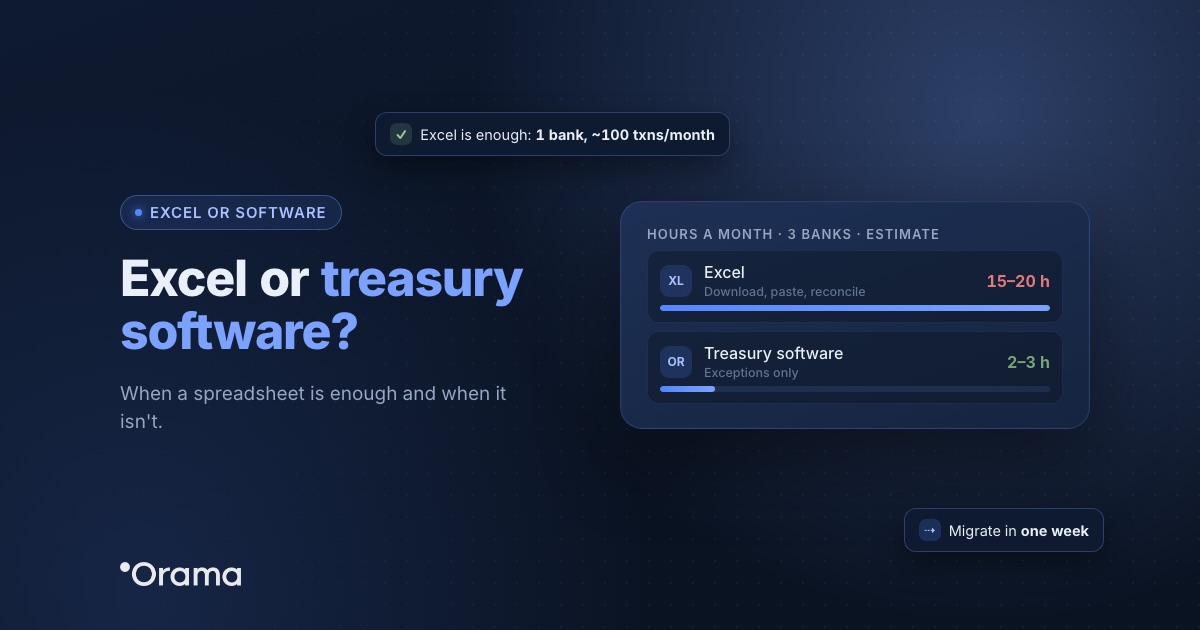
Until now, companies managed their treasury manually in Excel, which can result in human error due to lack of organisation and time or simply lack of data coordination. There are other companies that use their own digital management systems, which may be stuck in old technologies or company parameters. Upgrading this type of system or creating a new one is a very high investment and has few advantages today. The functionalities of a software like Orama are fully adaptable and upgradeable.
Orama is a user-friendly tool, which means that it does not require extensive technological and financial knowledge to be used. Its sections are based on language that is familiar within the finance sector and department, so it is easy to find your way around. It works in a similar way to Excel, the most used tool in this sector. This type of design allows it to be quickly incorporated into the way of working of the finance department of any company.
Annual cash flow forecasts
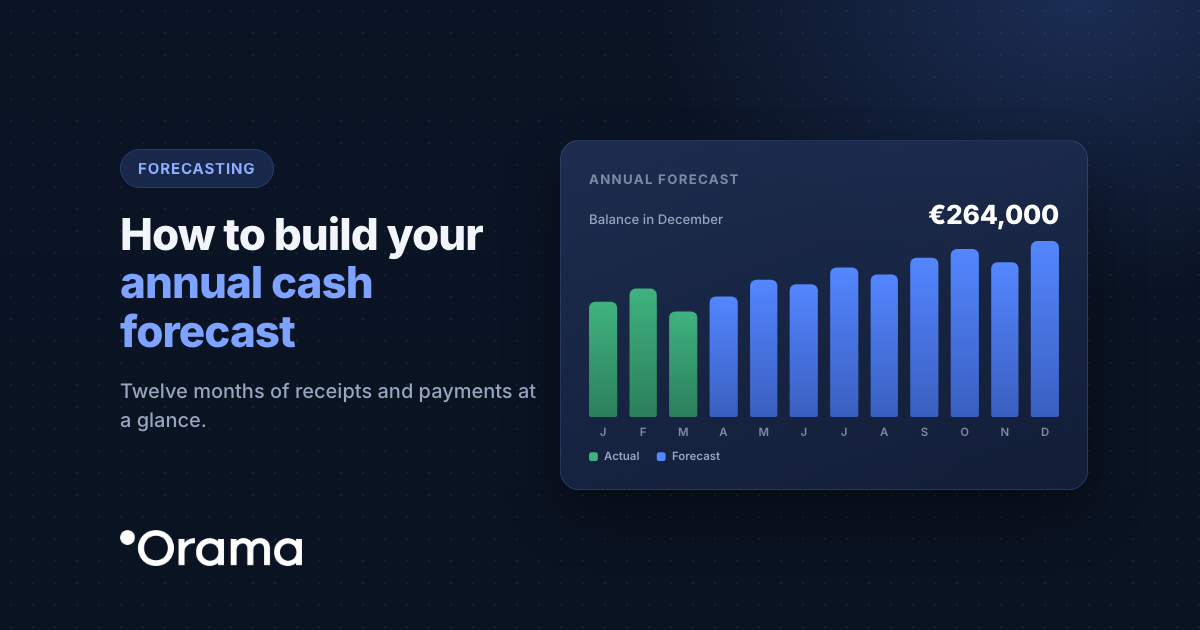
Thanks to Orama, you will be able to make annual cash forecasts fully automatically in just a few clicks. These financial forecasts are made on the basis of the history of your items (cash inflows and outflows) collected by the platform.
With Orama you build your forecast from a free base, a year-on-year base (from the same period of the previous year) or an AI base, at 12, 18 or 24 months, or whatever horizon you need.
In this way, you will be able to save a lot of time and avoid mistakes when planning your company’s financial year. With Orama, it has never been easier to make annual cash flow forecasts for your SME.
Managing your treasury through software allows you to:
- Track cash flow.
- View your bank transactions, updated up to 4 times a day.
- Receive email alerts when a specific movement or financial situation is detected.
- Analyse updated data.
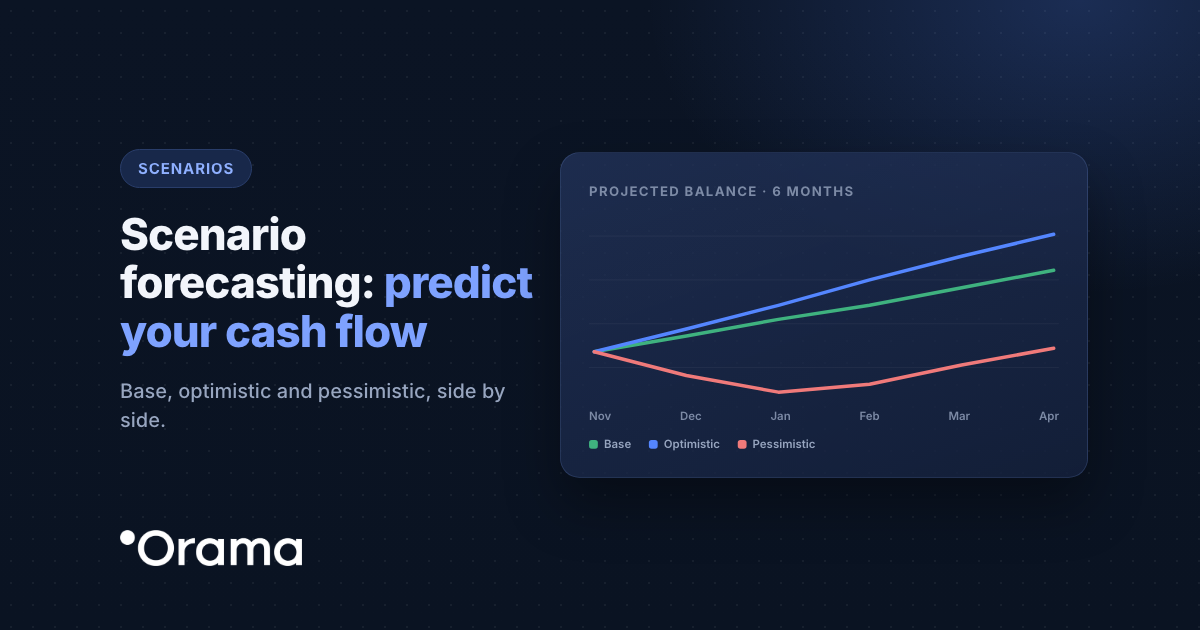
- Make short-, medium- and long-term forecasts.
- Adapt it to the way your company works.
- Get customer support.
How to make cash flow forecasts
Knowing how your cash will behave over time is essential to plan financial actions and make the best decisions within the company. Your treasury is the cash you have available; by monitoring it you can follow your cash flow, which analyses the company’s inflows and outflows and determines its liquidity.
What is the purpose of cash flow forecasts?
From what happened in the company’s past, you can predict what may happen in the future. Knowing how much liquid capital your company has today is fine, but knowing how much it will have throughout the year is what helps you make decisions. If the information from the past is well organised, the prediction will be even better.
Knowing what has happened in the past, how much liquidity you have now and how future actions will affect it, you can make decisions about how urgent a collection or a debt payment is.
How to make cash flow forecasts step by step
- Collect all data on receipts and payments. We are interested in cash flow and available liquidity, so gather only cash inflows and outflows. Connecting your invoicing software or your ERP will help you compile this information.
- Separate recurring from one-off items. Start the forecast by separating recurring collections from one-off ones, and do the same with payments. This avoids distortions in the forecast that could lead to wrong decisions and, perhaps, future cash flow problems.
- Choose the frequency. Pick the one that best suits your company (weekly, fortnightly or monthly). It is usual to start with a monthly forecast.
- Decide the level of detail. Ask yourself whether you need an overall picture of your cash or more detail. Either way, keep it simple: too many cash forecasts add complexity to management and make decision making harder.
- Use the right tool. Use a cash flow forecasting tool, such as Orama, that lets you make adjustments quickly and effectively.
- Compare with actual figures and adjust. Once you have the forecast, adjust it with the final data. These are estimates and are therefore subject to deviations (especially in unforeseen receipts and payments). Use those differences to make a better estimate in the following months.
📊 Free Excel template
Still doing your cash forecast by hand? Get the 13-week cash flow forecast template (in Spanish). Download the free template →