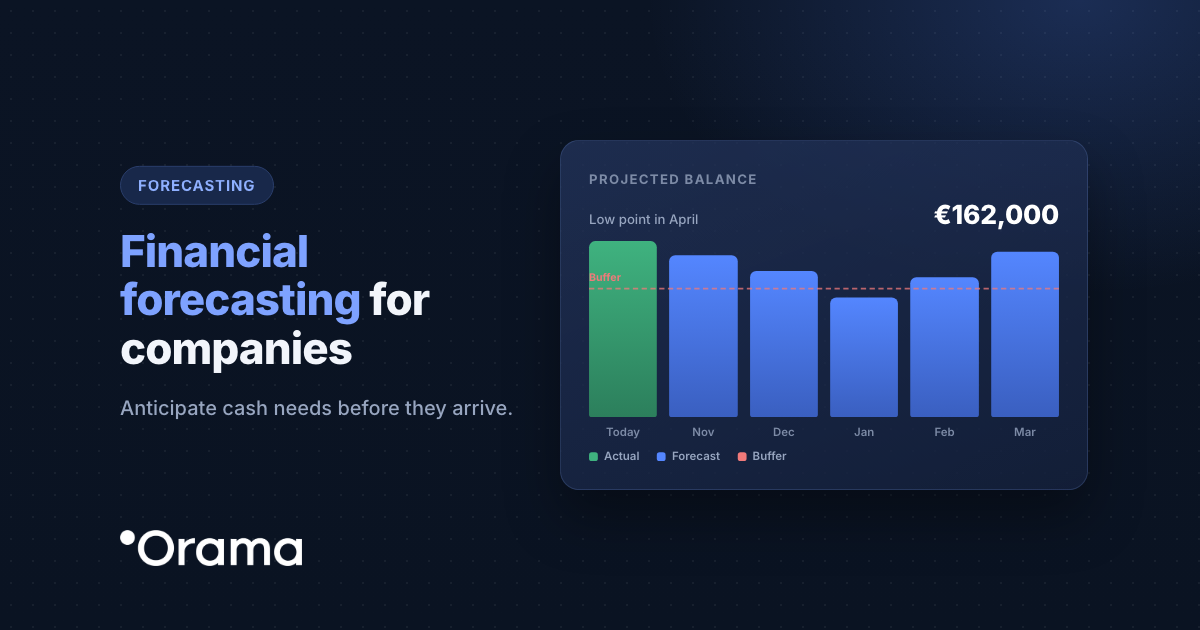
Within the general corporate planning we must take into account financial forecasting for companies, a process that consists of reflecting in the financial statements the company’s business model, acquisition, monetisation and cost structure. In other words, we can obtain projections to see whether our project has viability or profitability for the future.
What should it include?
A financial forecast should include projected revenues, assets, liabilities and cash flow, and those that are even more strategic will also take into account operational KPIs.
How do we make a financial forecast?
The following elements must be taken into account in order to correctly carry out the financial forecast:
- Initial capital of the company: the initial capital we have must be taken into account in order to be able to carry out the financing plan correctly, in addition to knowing in advance what actions we can carry out.
- Profitability: after having made the financing plan we have to see if our company will be able to follow it, that is to say, if it will be profitable in the first term.
- Cash flow plan: together we have to follow a plan that tracks the collections and disbursements made month by month in order to have an estimate.
- Break-even calculation: it shows how much you need to sell to cover your fixed costs.
- Financing plan: it covers longer terms, from 3 to 5 years, and defines how you will finance the execution of the project and whether you will be able to maintain the initial plan.
The importance of having a financial forecast in our company
In order to move forward we need to have a financial forecast, this way, we can get a picture of the possible results we can obtain with our business plan. Let’s say that we have the possibility of having a long-term vision of the investments and expenses we make, and of checking whether the project is sustainable before taking on the risk of failure.
To sum up…
The concept of forecasting evokes the term estimation, i.e., looking into the future. In the case of the financial and corporate sector these forecasts will be used for business planning of operations and to measure the possible impact that our management decisions may have on the financial situation of the company. Likewise, before making any forecast or estimate of what may happen with our company, we must have carried out a good strategic and budgetary planning process to see how our objectives as a company are developing.
Financial forecasting for startups
A lack of cash is one of the most frequent reasons why startups fail, and yet a good financial forecast is rarely a priority. When structuring the company, it is key to plan finances through projections and different scenarios, and to keep an up-to-date control of your cash so you know the financial health of your company.
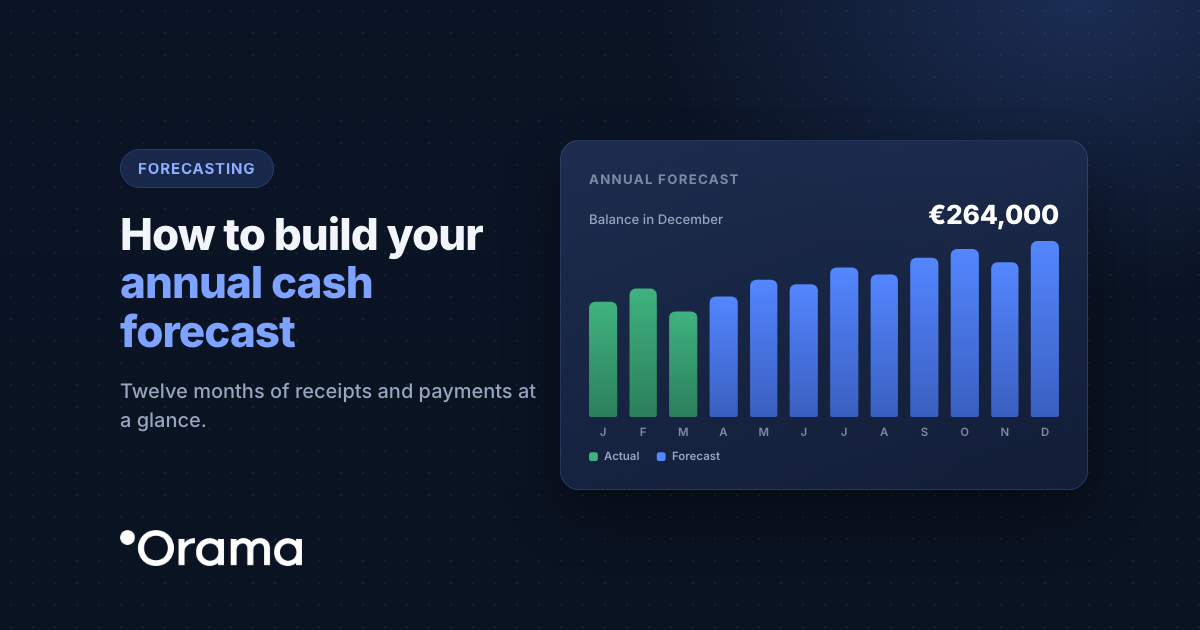
In a startup, the financial forecast is the monthly summary of the collections and payments to be made within one year. It is part of the financial plan, which brings together all the detailed and quantified information on the plans and objectives of the company and covers every area of the business. There are different ways to structure it; it is usually designed and monitored by the CFO.
Financial projections
A good financial forecast in a startup needs financial projections. They let you analyse historical and current performance to plan the company’s future in terms of expenses, income and investments. They are usually prepared annually and based on different variables, depending on the business model and, if the company already has a track record, on the analysis of its history.
One of the keys is cash flow projections: they tell you where cash will come from (accounts receivable, loans, a credit line…) and help you anticipate the situations the company may face so you can act accordingly.
Advantages of good financial projections
- They help to explain the business opportunity better and in figures, which is key to attracting investors to your company.
- They make it possible to establish how the expenses that keep the business running will be covered.
- They show the financial health of the company and its situation in the market (whether it has grown or stagnated).
- They reduce uncertainty, as they are built on real and verifiable data. By building different scenarios you can see different possible futures and prepare for the most relevant and plausible ones, although there will always be unexpected variables.
To make good projections you need your cash to be up to date, so that you can assess each scenario accurately. In short, financial projections allow a startup not only to react to imminent scenarios, but also to anticipate unlikely ones and make adjustments as soon as income or expenses change.
Book a 30-minute demo with us and learn how Orama can help you with your forecasts at 12, 18 or 24 months, or whatever horizon you need.